
A recent report ranks Colorado as the 4th most expensive State in the entire country and has increased every year in the rankings the last four years. Is Colorado becoming Whole Foods with high prices on everything? How should this change your investing decisions in Colorado?
What was in the data on Colorado affordability
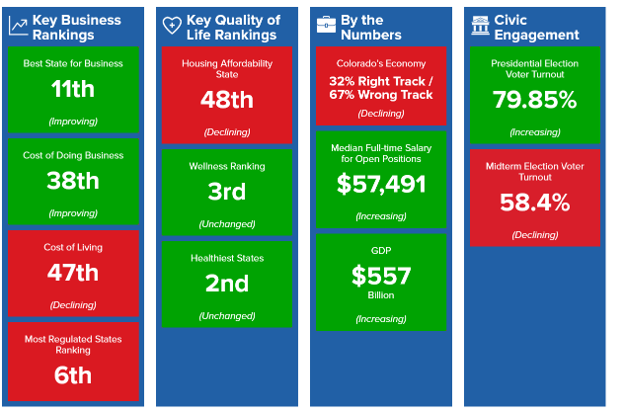
At the end of 2025 the Colorado Scorecard, a report released by the Colorado Chamber of Commerce, found that while the state is improving or leading in key sectors such as business friendliness, health and wellness and gross domestic product, Colorado continues struggling with housing affordability and its overall cost of living.
Colorado is now the fourth-most expensive state in the country to live in, ranking 47th in affordability in 2025. Colorado ranked 46th for cost of living in 2024, and four years ago in 2022 had the 34th-highest cost of living nationally, a ranking that has dropped every year since, according to the chamber’s scorecard.
Housing affordability has worsened. Colorado ranks 48th in the country for housing affordability, down from 47th in 2024 and 41st in 2021, the scorecard shows.
The Colorado Correlation with Whole Foods
Anybody who has shopped at Whole Foods knows you don’t go there for the cheapest prices. Walmart Supercenters are significantly cheaper than Whole Foods, with national price analyses consistently showing that Whole Foods’ groceries cost around 35% to 40% more. Walmart offers the lowest prices on bulk and national staples, whereas Whole Foods charges a premium for strict organic, non-GMO, and specialty sourcing.
Colorado is following the Whole Foods model with increasing prices on everything from housing, insurance, taxes, etc…. As prices rise on everything there become huge winners and losers in Colorado. For example, look at the homelessness rate, it has skyrocketed as the amount people need to spend on housing far outpaces their income. On the flip side there have been winners in the Whole Foods economy with higher earning workers able to afford premium houses and areas.
Colorado’s whole foods real estate problem
To see why Colorado has an affordability problem, look no further than residential real estate. In the last several legislative sessions, the legislature has made it very difficult to evict bad tenants and collect security deposits. Furthermore, many localities have passed habitability bills with inspections for rentals. Essentially all this legislation has made it too risky to rent to higher risk tenants and the market has reacted by almost solely focusing on higher end consumers. On top of new construction focusing on higher income tenants, many individual property owners have decided to sell there less expensive properties as they can get a higher return elsewhere. Long and short the legislature through its onerous regulations has forced Colorado property owners into the Whole Foods model as is no longer profitable to focus on lower income earners.
What does the Whole Foods model mean for Colorado real estate?
Just like in the grocery business there is a bifurcation with higher end customers continuing to spend while lower earning customers are pulling back. The winners and losers of the Colorado whole foods economy are apparent in real estate. Take a look at Cherry Creek, a very affluent area in Denver with some of the highest home prices in the metro. Look at this comparison of Cherry Creek (which is also in the Denver metro) versus broader Denver market:
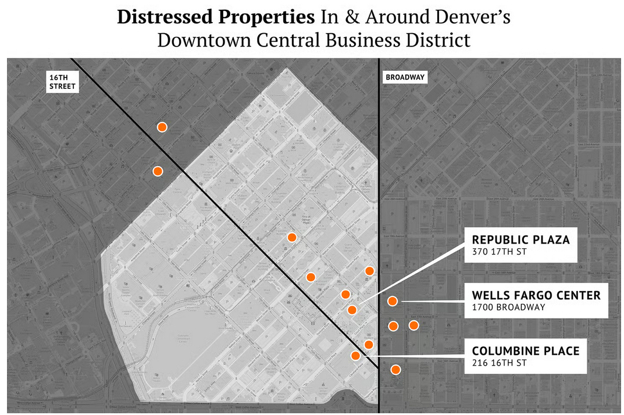
Cherry Creek sharply outperforms the broader Denver commercial market. While downtown Denver struggles with high vacancies and older office footprints, Cherry Creek boasts historically low vacancy rates for both office and retail space, driven by strong corporate demand and upscale, walkable amenities.
Office Market Vacancy
- Cherry Creek: Office vacancy rates in the immediate Cherry Creek North district are exceptionally low, hovering between 1.3% and 2%. Even across the broader Cherry Creek area, office vacancy is only around 10.5%, significantly outperforming the rest of the metro.
- Downtown Denver: In contrast, the broader downtown/central business district struggles with office vacancy rates ranging anywhere from 30% to nearly 60%.
Retail Market Vacancy
- Cherry Creek: Retail vacancies remain near rock-bottom, regularly sitting around 1.4%, which is drastically lower than national and local averages. New construction projects in the area are often 99% pre-leased before they are even completed.
- Denver: The broader City of Denver maintains a much higher retail vacancy rate of roughly 30%.
The Economic Drivers
- Investment & Growth: While downtown Denver faces office foreclosures, Cherry Creek has become a magnet for corporate employers, tech firms, and luxury retailers. New developments, such as the mixed-use projects in Cherry Creek West, are drawing high demand.
- Tax Generation: The boom makes Cherry Creek a massive economic engine for the city. The 16-block Cherry Creek North district alone contributes over $119 million in tax revenue to Denver annually.

How should the Whole Foods model influence your Colorado real estate investments?
The legislature has made it unprofitable to focus on lower priced rentals. Even with some condos in Denver trading under 100k that look like attractive rentals, the numbers still do not work with all the government regulations. Unfortunately this is leading to many units becoming basically worthless as prices can’t get low enough to justify the increased regulatory risks.
On the flip side places like Cherry Creek or Steamboat continue to perform much better than lower cost areas within the Denver metro. This trend should continue even if there is a downturn where higher income areas outperforming. The irony is that in the last cycle we saw just the opposite where lower priced areas staged a huge comeback. Unfortunately, in Colorado due to the huge changes in government regulations I don’t think the 08 cycle is indicative of what will occur in the next cycle. You should adjust your investing accordingly.
Whole Foods model not the best model for Colorado
Colorado has created a dangerous concoction pricing out lower income consumers due to high build costs, increased regulations, etc…. This is the same model that has not worked in many California cities where costs become so high due to government intervention that it creates only one “grocery” option, the most expensive one just like whole foods.
The Whole Foods model is dangerous whereas only the high-end consumers continue to spend and power the economy. We can see this in Cherry Creek, Boulder, and every ski town. Eventually many of these high-end spenders leave as taxes and regulation get so high they opt for other locations. We can see this in California, New York, and now Washington State. Without diversification in the economy and continued regulation driving prices higher, Colorado is drastically altering the real estate market dynamics and becoming the whole foods model in the grocery business.
Furthermore, Colorado’s alteration of the real estate market has increased costs of living for most as the market consolidates around one model and eliminates most of the competition in the lower tiers of the market. We can see this clearly with the surge in homelessness throughout Denver as low-cost options are not available anymore. Contrast Colorado’s model to Salt Lake City (or any market in Texas) where less regulation is leading to a much slower increase in the cost of living which is attracting new residents and businesses which create an upward spiral of prosperity for most residents. Unfortunately our legislature has not learned that the Costco model is much better than the whole foods model by focusing on a broader demographic and not just the high end.
Additional Reading/Resources:
- https://www.denvergazette.com/2026/05/16/colorado-cost-of-living-state-is-now-4th-most-expensive-in-u-s-and-residents-feel-the-strain/
- https://coloradohardmoney.com/is-affordable-housing-causing-the-surge-in-ski-town-home-prices/
- https://coloradohardmoney.com/top-cities-exposed-to-ai-two-are-in-colorado/
- https://coloradohardmoney.com/colorado-spends-10-dollars-for-every-dollar-it-takes-in/
We are a Colorado Private/ Hard Money Lender funding in cash!
If you were forwarded this message, please subscribe to our newsletter
I need your help as my goal in writing these articles is to provide the best information/insight on Colorado Real Estate that you cannot get anywhere else! Please like and share my articles on linked in, twitter, facebook, and other social media and forward to your friends/associates 😊 I would greatly appreciate it.
Glen Weinberg personally writes these weekly real estate blogs based on his real estate experience as a lender and property owner. He is the owner of Fairview Commercial Lending. Glen has been published as an expert in hard money lending, real estate valuation, financing, and various other real estate topics in Bloomberg, Businessweek ,the Colorado Real Estate Journal, National Association of Realtors Magazine, The Real Deal real estate news, the CO Biz Magazine, The Denver Post, The Scotsman mortgage broker guide, Mortgage Professional America and various other national publications.
Glen resides in Colorado, lends in Colorado, owns property in Colorado, and services loans in Colorado which provides a unique real estate prospective of what is actually happening on the ground both in Denver and throughout Colorado. My goal of this real estate blog is to provide an honest assessment of what I see happening in Colorado real estate and how it will impact real estate owners, buyers, realtors, mortgage professionals, etc…
Fairview is the recognized leader in Colorado Hard Money and Colorado private lending focusing on residential investment properties and commercial properties both in Denver and throughout the state. We are the Colorado experts having closed thousands of loans throughout the Front range, Western slope, resort communities, and everywhere in between. We also live, work, and play in the mountains throughout Colorado and understand the intricacies of each market.
When you call you will speak directly to the decision makers and get an honest answer quickly. We are recognized in the industry as the leader in Colorado hard money lending with no upfront fees or any other games. Learn more about Hard Money Lending through our free Hard Money Guide. To get started on a loan all we need is our simple one page application (no upfront fees or other games). Learn how to find a reputable hard money lender and why Fairview is the best hard money lender for investors.
Tags: Denver hard money, Denver Colorado hard money lender, Colorado hard money, Colorado private lender, Denver private lender, Colorado ski lender, Colorado real estate trends, Colorado real estate prices, Private real estate loans, Hard money loans, Private real estate mortgage, Hard money mortgage lender, Hard money mortgage lender, residential hard money loans, commercial hard money loans, private mortgage lender, Hard Money Lender, Private lender, private real estate lender, residential hard money lender, commercial hard money lender, No doc real estate lender



