
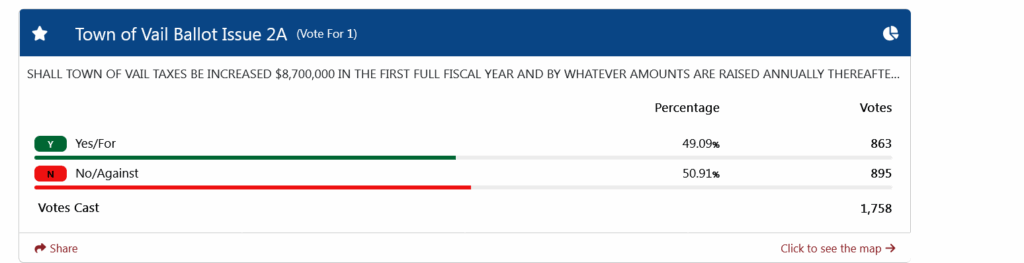
Two high end Colorado ski towns are taking radically different stances on tourism. Vail had proposed a 17% short term rental sales tax, while Steamboat is taking the opposite approach by proposing to tax vacant homes. Which solution is correct? What does each one mean for real estate prices? What is a third solution that might be better?
Why are Colorado ski towns so adamant about increasing taxes?
I’ve written in past blogs about how tourism in Colorado ski towns is not paying its own way. Essentially the increase in tourism is leading to huge budget shortfalls that must be made up somehow. Couple the revenue issues with spending sprees in most Colorado ski towns and we have the issue we are now facing. The money has to come from somewhere and Vail and Steamboat are taking two radically different approaches to taxation to increase revenues.
The Vail solution of 17% tax on short term rental stays
Vail had proposed an additional 6% tax on short-term rental stays leading to a 16.8% total tax on nightly rental stays. This is one of the highest in Colorado
Pros: will make tourism pay its fair share with taxes used to fund affordable housing, etc…
Cons: Will likely not bring in near the amount of money they think as we have seen in Breckenridge and other cities the problem merely moves. For example when Breckenridge increased nightly rental regulations, now more rentals got pushed through to Frisco, Copper, Silverthorne, Keystone, etc… which didn’t really solve the issue. In the case of Vail, you will see more rentals in non vail areas and places like Copper where you can commute into Vail so the problem of nightly rentals will merely move to other areas. Ironically what we saw in Breckenridge is that house prices shot up in once affordable areas like Copper Mountain that used to house locals; these units were either sold or moved into nightly rentals as demand increased so much.
The Steamboat solution of taxing vacant homes
Steamboat has proposed a vacant home tax to tax second homeowners 3100/year if the property is used less than 183 days a year by the owner or a tenant. Although the vacant home tax did not make it on the ballot this year, many councilors are still on the vacant tax bandwagon so look for it to come up for vote again soon.
Pros: Consistent source of revenue for the city, but the costs will far outweigh any tax benefit.
Cons: Steamboat is missing a basic economic principle, a vacant home is actually the best thing for a community, especially expensive homes. Roads, sewer, etc… are sunk costs that must be maintained whether people are in the houses or not. People who are leaving their houses vacant and only using them for a month or so are awesome for communities as they provide substantially more in taxes than they use in services as opposed to rental houses. The person who only uses the house for 30 days or so a year is still going out to eat, buying furniture, paying utility bills, in many cases donating to local causes, etc… They are the ideal candidate for what you want in a high end ski town
Silverthorne solution: impact fees
One way to try and break the cycle of increased costs vs tourism is to create impact fees so that new demand for services actually pays for itself and doesn’t set cities up for the current Ponzi scheme. Silverthorne fire attempted to introduce impact fees:
Examples of the maximum fees proposed include: a $1,084 fee for homes sized between 1,001 square feet to 2,000 square feet; a $3,961 fee per 1,000 square feet for new retail developments; a $2,198 fee per 1,000 square feet for office space development; and a $7,507 fee per 1,000 square feet for institutional developments.
Pros: Ties growth in services with development so that new demands for services pay their own way
Cons: It will slow growth down, many of the city councils are so concerned with the revenue number as opposed to the profitability number that these proposals rarely get off the ground.
What is the best solution for solving the tourism and housing issues in CO ski towns?
Unfortunately all three proposals in Vail, Steamboat, and Silverthorne were defeated so we don’t have real world data to see which would be the best solution. Regardless, the best solution is for ski towns to drastically reduce spending so that taxes don’t have to continually be raised. Furthermore, ski towns need to be more creative with affordable housing. For example in Steamboat instead of spending 50 million on a new subdivision with questionable soils, why not for half that amount build a subdivision in Craig or buy existing homes in Craig for a third of the cost?
Once expenses of ski towns are brought in line and affordable housing has a logical plan taxes can be implemented to help. Of the three proposed, I think the best solution is impact fees that tie growth in services to expenses. Silverthorne tried and failed but this should be the top tool in ski towns.
Next a short term rental tax is also part of the tax mix if done correctly. It needs to be done county wide and distributed back to the cities where the tax is collected (or a percentage). For example for Eagle county maybe an 8-10% short term rental tax county wide (or whatever is determined to be the appropriate number) as opposed to 6% in unincorporated areas and 17% in vail.
The vacancy tax is the worst idea as the costs from alienating second home owners is not worth any revenue gain. The wealthy second home owners provide huge benefits by paying the same taxes as locals and yet not using the services like schools, etc… Leaving houses vacant should actually be encouraged to help with the tourism issue many ski towns are facing.
Unfortunately there is not a single ski town that is handling tourism correctly. It will be interesting to see how the various taxes play out over the next several years and what the actual results are. Regardless of which ends up the correct solution, I’m willing to bet a ton of money that three years from now even with the increased taxes we will still be having heated discussions about tourism, housing, spending, etc… as no ski town is taking a comprehensive approach and making the hard choices to balance the competing interests.
Additional Reading/Resources
- https://coloradohardmoney.com/are-colorado-ski-towns-running-a-pyramid-scheme/
- https://coloradohardmoney.com/colorado-vacancy-tax/
- 7 Colorado counties asking voters to raise lodging taxes to pay bills
We are a Colorado Private/ Hard Money Lender funding in cash!
If you were forwarded this message, please subscribe to our newsletter
I need your help as my goal in writing these articles is to provide the best information/insight on Colorado Real Estate that you cannot get anywhere else! Please like and share my articles on linked in, twitter, facebook, and other social media and forward to your friends/associates I would greatly appreciate it.
Glen Weinberg personally writes these weekly real estate blogs based on his real estate experience as a lender and property owner. He is the owner of Fairview Commercial Lending. Glen has been published as an expert in hard money lending, real estate valuation, financing, and various other real estate topics in Bloomberg, Businessweek ,the Colorado Real Estate Journal, National Association of Realtors Magazine, The Real Deal real estate news, the CO Biz Magazine, The Denver Post, The Scotsman mortgage broker guide, Mortgage Professional America and various other national publications.
Glen resides in Colorado, lends in Colorado, owns property in Colorado, and services loans in Colorado which provides a unique real estate prospective of what is actually happening on the ground both in Denver and throughout Colorado. My goal of this real estate blog is to provide an honest assessment of what I see happening in Colorado real estate and how it will impact real estate owners, buyers, realtors, mortgage professionals, etc…
Fairview is the recognized leader in Colorado Hard Money and Colorado private lending focusing on residential investment properties and commercial properties both in Denver and throughout the state. We are the Colorado experts having closed thousands of loans throughout the Front range, Western slope, resort communities, and everywhere in between. We also live, work, and play in the mountains throughout Colorado and understand the intricacies of each market.
When you call you will speak directly to the decision makers and get an honest answer quickly. We are recognized in the industry as the leader in Colorado hard money lending with no upfront fees or any other games. Learn more about Hard Money Lending through our free Hard Money Guide. To get started on a loan all we need is our simple one page application (no upfront fees or other games). Learn how to find a reputable hard money lender and why Fairview is the best hard money lender for investors.
Tags: Denver hard money, Denver Colorado hard money lender, Colorado hard money, Colorado private lender, Denver private lender, Colorado ski lender, Colorado real estate trends, Colorado real estate prices, Private real estate loans, Hard money loans, Private real estate mortgage, Hard money mortgage lender, Hard money mortgage lender, residential hard money loans, commercial hard money loans, private mortgage lender, Hard Money Lender, Private lender, private real estate lender, residential hard money lender, commercial hard money lender, No doc real estate lender