Reading the headline, it sounds absolutely crazy to propose taxing businesses for creating jobs, but is this really a crazy idea? Is every job worth the same in Colorado? For example if someone builds a large hotel in Steamboat creating 15 jobs, should the developer have to pay for the impact of those jobs? Should towns “tax” certain job creators? What is the proposal in Steamboat and what does this mean for cities throughout Colorado?
Why are Steamboat and other Colorado cities considering taxing developers?
First, the question of fairness is the impetus for the new tax proposals. Building on the example above. There is a new hotel that was recently built in Steamboat, it will require let’s say 10 new employees. Not a single one of these employees will be able to afford a house in Steamboat where the median home price is now around $1.5m.
Every single one of these workers will need housing assistance or have to live outside of Steamboat to work at this hotel. Furthermore a new 100 room hotel will add more strain on transportation, police, fire, restaurants, etc… Unfortunately the additional revenue from sales taxes will come nowhere near enough to cover the incremental costs.
I’m not picking on hotels, essentially every business in a ski town is hospitality-oriented meaning wages will come nowhere near close enough to allow someone to comfortably live in the area (unless they have been there for a long time and got in before prices skyrocketed). I’ve written before that ski towns are basically running a ponzi scheme where it is a constant requirement to have more tourism because existing tourism is not covering the bills. This theory is playing out in real life in every single ski town in Colorado which has led Steamboat to propose a linkage fee to force developers to pay for the impacts of the incremental costs.
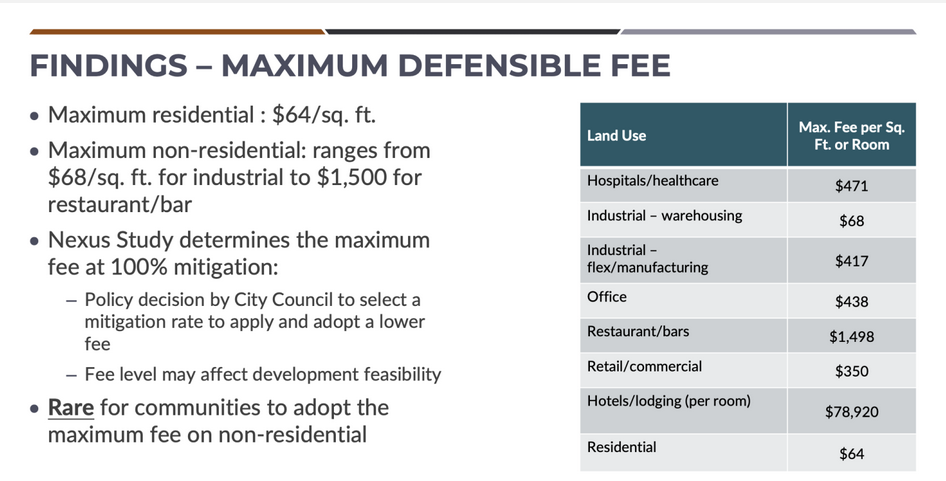
What is in the Steamboat proposal on linkage fees
The Steamboat Springs City Council unanimously green-lit preliminary recommendations Tuesday for a linkage-fee program that would require new commercial and residential developers to help fund workforce housing for the jobs and residents their projects create.
Linkage fees hit “net new space” — fresh construction or additions of more than 50% of the existing floor area, the consultants explained.
The consultants used a simple case as an example: a 10,000 square-foot building that is expected to utilize 10 workers, at 50% mitigation and a $100,000 gap per worker, equals a $500,000 fee.
“It’s a very transparent and linear process in terms of how it applies, which means it’s also predictable for the city, for developers, for anyone looking to understand the program,” said Duffany.
Use of linkage-fee revenue would be restricted to capital costs, such as new construction, land acquisition, infrastructure improvements and engineering studies, versus ongoing operational expenses like rental assistance or child care programs.
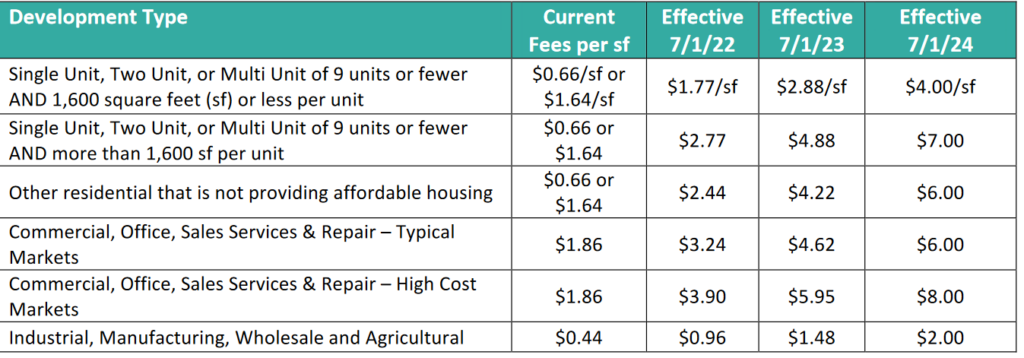
Is the linkage fee a good idea economically?
Regardless of your political bent, from a true economic perspective does a linkage fee make sense? In almost every market, creating new jobs is a net positive that cities are excited to help foster. Unfortunately in the ski towns there has been an economic disconnect as prices are so far out of reach for the workforce that every new job is another possibly unhoused worker. In essence new jobs are creating a snowball issue of a housing crisis in every single ski town. Various mitigation strategies have been tried with inclusionary zoning, housing requirements for new construction, etc.. but none of these have really moved the needle yet which has led us to where we are with the linkage fee.
Although the linkage fee goes against the typical thoughts of a free market, in this case, the expenses of the mountain communities are so high that they no longer function in true economic models.
Based on the situation in every Colorado ski town, I think linkage fees are a “fair” solution in order to allocate costs to the appropriate parties.
Linkage fees, the new paradigm in Colorado ski towns.
The question of linkage fees comes back to the question of fairness. For example, as a resident of a ski town, should I be responsible to “subsidize” a large development that is going to bring 15 workers that can’t afford to live in the area? This is where linkage fees come in to try and mitigate the costs to the entire community.
The downside is that linkage fees will slow down development in towns like Steamboat as it will be considerably more expensive to build another hotel, or large residential development. Fortunately, this slowdown in development will have no impact on affordable housing supply (other than hopefully less demand) as developments today are unable to create market rate housing in any ski town due to the huge expenses.
It will be interesting to see how linkage fees play out in the market and what the true impacts are. Furthermore, it is important to note that Colorado ski towns operate with a herd mentality so look for other ski towns to follow suit once this is implemented in Steamboat.
Additional Reading/Resources:
- https://www.steamboatpilot.com/news/steamboat-city-council-eyes-linkage-fees-to-help-fund-workforce-housing/
- https://coloradohardmoney.com/are-colorado-ski-towns-running-a-pyramid-scheme/
- https://coloradohardmoney.com/i70-traffic-snarls-ski-real-estate-2/
- https://coloradohardmoney.com/was-this-ski-season-really-a-disaster-for-colorado-the-numbers-dont-lie/
We are a Colorado Private/ Hard Money Lender funding in cash!
If you were forwarded this message, please subscribe to our newsletter
I need your help as my goal in writing these articles is to provide the best information/insight on Colorado Real Estate that you cannot get anywhere else! Please like and share my articles on linked in, twitter, facebook, and other social media and forward to your friends/associates 😊 I would greatly appreciate it.
Glen Weinberg personally writes these weekly real estate blogs based on his real estate experience as a lender and property owner. He is the owner of Fairview Commercial Lending. Glen has been published as an expert in hard money lending, real estate valuation, financing, and various other real estate topics in Bloomberg, Businessweek ,the Colorado Real Estate Journal, National Association of Realtors Magazine, The Real Deal real estate news, the CO Biz Magazine, The Denver Post, The Scotsman mortgage broker guide, Mortgage Professional America and various other national publications.
Glen resides in Colorado, lends in Colorado, owns property in Colorado, and services loans in Colorado which provides a unique real estate prospective of what is actually happening on the ground both in Denver and throughout Colorado. My goal of this real estate blog is to provide an honest assessment of what I see happening in Colorado real estate and how it will impact real estate owners, buyers, realtors, mortgage professionals, etc…
Fairview is the recognized leader in Colorado Hard Money and Colorado private lending focusing on residential investment properties and commercial properties both in Denver and throughout the state. We are the Colorado experts having closed thousands of loans throughout the Front range, Western slope, resort communities, and everywhere in between. We also live, work, and play in the mountains throughout Colorado and understand the intricacies of each market.
When you call you will speak directly to the decision makers and get an honest answer quickly. We are recognized in the industry as the leader in Colorado hard money lending with no upfront fees or any other games. Learn more about Hard Money Lending through our free Hard Money Guide. To get started on a loan all we need is our simple one page application (no upfront fees or other games). Learn how to find a reputable hard money lender and why Fairview is the best hard money lender for investors.
Tags: Denver hard money, Denver Colorado hard money lender, Colorado hard money, Colorado private lender, Denver private lender, Colorado ski lender, Colorado real estate trends, Colorado real estate prices, Private real estate loans, Hard money loans, Private real estate mortgage, Hard money mortgage lender, Hard money mortgage lender, residential hard money loans, commercial hard money loans, private mortgage lender, Hard Money Lender, Private lender, private real estate lender, residential hard money lender, commercial hard money lender, No doc real estate lender